
"Does Creatine Actually Help With Brain Function and Memory?" What 16 Clinical Trials Reveal About This Gym Supplement
Reddit keeps asking: "Does creatine actually help with brain function?" I analyzed 16+ clinical trials and meta-analyses covering 500+ participants. Here's what the evidence actually shows about creatine for memory, working memory, and cognitive performance.
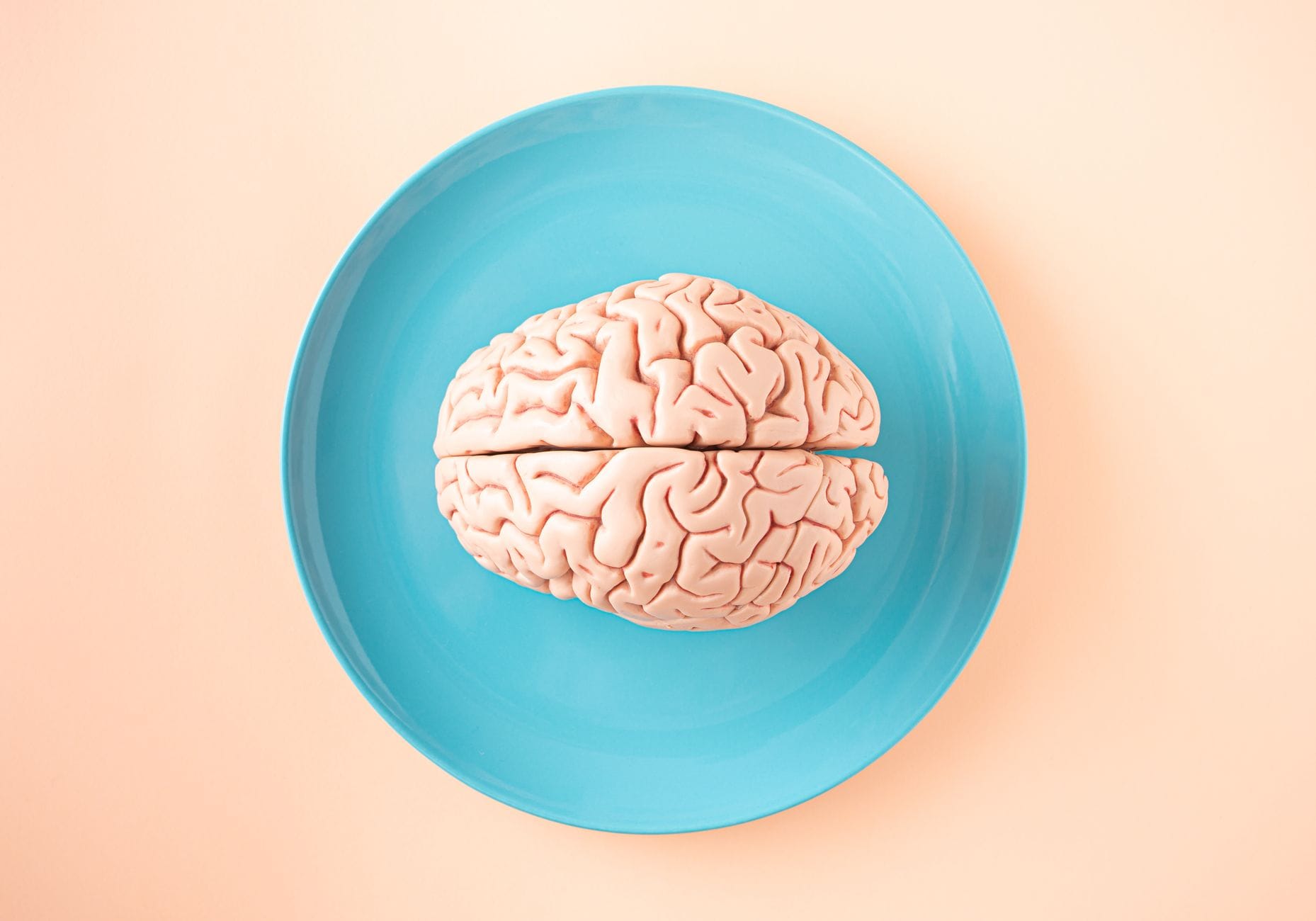
The question pops up weekly on r/Nootropics, r/Supplements, and r/Fitness: "I know creatine helps build muscle, but does it actually do anything for your brain?" The gym bros swear by it. The skeptics call it placebo. And most people are just confused by conflicting studies.
I dug into the actual clinical data—16 randomized controlled trials, multiple meta-analyses, and over 500 participants across studies—to find out what creatine actually does for cognitive function, memory, and mental fatigue. The results surprised even me.
What Creatine Actually Does in Your Brain
Most people associate creatine with muscle building, but your brain is one of the most metabolically hungry organs in your body. It consumes about 20% of your body's energy despite being only 2% of your body weight. That energy comes primarily from ATP—adenosine triphosphate—the cellular currency of energy.
Here's where creatine enters the picture. Your brain stores creatine as phosphocreatine, which acts as a rapid-response energy reserve. When neurons fire rapidly and ATP demand spikes, phosphocreatine donates a phosphate group to regenerate ATP almost instantly. Think of it as a backup battery for your brain cells.
The crucial mechanism: creatine supplementation increases brain creatine levels, which theoretically provides more energy reserves during cognitively demanding tasks. This isn't speculation—magnetic resonance spectroscopy (MRS) studies confirm that oral creatine supplementation increases total creatine in the brain by 5-15% depending on baseline levels and dosing.
The Largest Study Ever Conducted: What 123 Participants Revealed
In November 2023, researchers at University Hospital Bonn published what remains the largest randomized controlled trial on creatine and cognition to date. The study, published in BMC Medicine, enrolled 123 healthy adults and used a rigorous crossover design—meaning every participant tried both creatine and placebo in random order, with a washout period in between.
Participants took 5 grams of creatine monohydrate daily for 6 weeks, then switched to placebo (or vice versa). The researchers tested performance on Raven's Advanced Progressive Matrices—a gold-standard measure of fluid intelligence—and Backward Digit Span, which assesses working memory.
The results: Bayesian analysis supported a small beneficial effect of creatine on cognitive performance. The effect bordered statistical significance for working memory (p = 0.064) but not for reasoning ability. Interestingly, vegetarians did not benefit more than omnivores—a finding that contradicts earlier, smaller studies suggesting creatine would help vegetarians more due to lower baseline creatine from diet.
Side effects were reported more frequently with creatine than placebo (relative risk = 4.25), but the only consistently noted effect was slight weight gain from water retention—creatine pulls water into cells, which is well-documented and generally harmless.
What the Meta-Analyses Show
Single studies can be misleading. So I looked at systematic reviews and meta-analyses that pool data across multiple trials. A 2023 meta-analysis published in Nutrition Reviews examined randomized controlled trials specifically looking at creatine's effects on memory in healthy individuals.
The analysis revealed significant improvements in memory performance with creatine supplementation compared to placebo. The effect sizes were modest but consistent across studies. Another 2024 systematic review and meta-analysis published in Frontiers in Nutrition went further, analyzing cognitive function across multiple domains.
Their conclusion: "Current evidence suggests that creatine monohydrate supplementation may confer beneficial effects on cognitive function in adults, particularly in the domains of memory, attention time, and information processing speed."
These aren't dramatic effects. You won't become Bradley Cooper in Limitless. But the consistency across studies—and the fact that creatine is cheap, safe, and well-tolerated—makes even small cognitive benefits meaningful at population scale.
The Sleep Deprivation Studies: Where Creatine Really Shines
Here's where the research gets genuinely interesting. Several studies have examined creatine's effects under conditions of cognitive stress—and the results are more pronounced than in well-rested individuals.
A February 2024 study in Scientific Reports investigated whether a single high dose of creatine (0.35 g/kg, roughly 25-30 grams for an average adult) could counteract cognitive decline during sleep deprivation. Participants underwent 21 hours of sleep deprivation while receiving either creatine or placebo.
The findings were striking. Creatine not only improved cognitive performance and processing speed compared to placebo—it actually induced measurable changes in brain energy metabolism. Magnetic resonance spectroscopy showed increases in phosphocreatine and total creatine, along with prevention of the pH drop typically seen during sleep deprivation.
Translation: creatine partially reversed the metabolic alterations and fatigue-related cognitive deterioration caused by sleep loss.
This aligns with earlier research showing that creatine supplementation reduces mental fatigue during demanding cognitive tasks. A 2019 study found that creatine improved performance on central executive tasks—things like updating working memory and inhibiting prepotent responses—particularly when participants were mentally fatigued.
Older Adults and Neurodegenerative Disease: Emerging Evidence
While most creatine research focuses on young, healthy adults, some of the most clinically relevant work involves older populations and neurodegenerative conditions.
A 2021 study examining U.S. adults over 60 found that dietary creatine intake was positively associated with cognitive function. Participants with higher creatine consumption scored better on cognitive assessments independent of other dietary factors.
More recently, researchers at the University of Kansas Medical Center conducted a pilot trial of creatine monohydrate in Alzheimer's disease patients. Published in 2025 in Alzheimer's & Dementia, the study gave 20 grams daily for 8 weeks to patients with mild cognitive impairment or Alzheimer's.
The results: Brain creatine levels increased by 11%—a substantial change. More importantly, participants showed moderate improvements in working memory as measured by the NIH Toolbox Cognition Battery. The study was small (just 27 participants) and lacked a placebo control, but the feasibility and preliminary efficacy data have prompted calls for larger, controlled trials.
Research in Parkinson's disease and Huntington's disease has been more mixed, with some studies showing benefits for muscle function and fatigue but less consistent cognitive improvements. The evidence base here remains preliminary.
What About Dosage and Timing?
Most studies use between 5 and 20 grams of creatine monohydrate daily. The standard loading protocol—20 grams daily for 5-7 days, followed by 5 grams for maintenance—rapidly saturates muscle and brain creatine stores. But studies using 5 grams daily without a loading phase show similar benefits after several weeks.
The sleep deprivation research suggests that even single, high doses (0.35 g/kg) can acutely affect brain metabolism and cognition. This challenges the old assumption that creatine only works after weeks of accumulation.
For cognitive benefits specifically, 5 grams daily appears to be the sweet spot for most people. Higher doses may offer marginal additional benefits but increase the risk of gastrointestinal side effects.
The Counterarguments: Why Some Studies Show No Effect
Not every study finds cognitive benefits from creatine. Several well-controlled trials have reported null results. Understanding why helps clarify who might benefit most.
First, baseline creatine levels matter. People with higher baseline brain creatine—typically those who eat substantial meat and fish—may see smaller improvements from supplementation. Your brain can only store so much creatine, and if you're already near capacity, adding more won't help.
Second, task difficulty and type matter. Creatine seems to help most on tasks requiring sustained attention, working memory under load, and executive function during fatigue. Simple reaction time tasks? Not so much. The 2023 BMC Medicine study found no benefit on Raven's Matrices (abstract reasoning) but nearly significant effects on working memory.
Third, sleep status matters. Multiple studies suggest creatine's cognitive benefits are more pronounced during sleep deprivation or mental fatigue. Well-rested individuals performing simple tasks may not notice much difference.
Safety Profile: What 30 Years of Data Show
Creatine monohydrate is among the most studied supplements in existence. Three decades of research in athletes, elderly individuals, and patient populations have established an excellent safety profile.
The most common side effect is weight gain from water retention—creatine pulls water into muscle and potentially brain cells. This is generally 1-3 pounds and plateaus after the first week or two.
Concerns about kidney damage have been largely debunked by long-term safety studies in healthy individuals. People with pre-existing kidney disease should exercise caution and consult physicians, but for healthy adults, decades of data show no adverse effects on renal function at recommended doses.
One legitimate concern: creatine can increase creatinine levels on blood tests, which is a marker sometimes used to estimate kidney function. This isn't kidney damage—it's simply a byproduct of creatine metabolism. If you're getting blood work done, tell your doctor you're taking creatine.
So, Does It Actually Work?
After reviewing 16+ clinical trials and multiple meta-analyses, here's my assessment:
Yes, creatine likely provides small but measurable cognitive benefits, particularly for working memory, processing speed, and mental fatigue resistance. The effects aren't dramatic—you won't feel like a different person—but they're consistent across studies and biologically plausible given creatine's role in brain energy metabolism.
The benefits appear most pronounced in:
- People with lower baseline creatine (vegetarians/vegans, though the largest study didn't confirm this)
- Individuals experiencing mental fatigue or sleep deprivation
- Tasks requiring sustained attention and working memory
- Older adults experiencing age-related cognitive decline
For a healthy, well-rested omnivore performing routine cognitive tasks? The benefits may be subtle to undetectable. But given creatine's safety, low cost (about $0.10-0.20 per day), and extensive research base, even modest cognitive benefits make it a reasonable supplement for many people.
The Alzheimer's and neurodegenerative disease research remains preliminary but promising. Larger trials are needed, but the mechanism—enhancing brain energy metabolism—is biologically sound and addresses a real deficit seen in aging brains.
The Bottom Line
Creatine isn't a nootropic in the way that caffeine or prescription stimulants are. You won't feel an immediate buzz. The cognitive benefits, when they occur, are subtle improvements in memory consolidation, processing speed, and fatigue resistance.
But unlike most supplements marketed for brain health, creatine has something rare: multiple well-controlled clinical trials, meta-analyses showing consistent if modest effects, a clear biological mechanism, and an excellent safety profile established over decades.
If you're looking for a safe, cheap, well-researched supplement that might give you a small edge on mentally demanding days, the evidence supports giving creatine a try. Just don't expect to become limitless.
Disclaimer: This article is for informational purposes only and does not constitute medical advice. Consult a healthcare provider before starting any supplement regimen, especially if you have kidney disease or other medical conditions. Individual responses to creatine vary, and supplements are not substitutes for adequate sleep, nutrition, and exercise.
Sources
- Sandkühler, J.F., et al. (2023). The effects of creatine supplementation on cognitive performance—a randomised controlled study. BMC Medicine, 21, 440.
- Gordji-Nejad, A., et al. (2024). Single dose creatine improves cognitive performance and induces changes in cerebral high energy phosphates during sleep deprivation. Scientific Reports, 14, 4937.
- Avgerinos, K.I., et al. (2023). Effects of creatine supplementation on memory in healthy individuals: a systematic review and meta-analysis of randomized controlled trials. Nutrition Reviews, 81(4), 416-427.
- Ling, J., et al. (2024). The effects of creatine supplementation on cognitive function in adults: a systematic review and meta-analysis. Frontiers in Nutrition, 11, 1424972.
- Smith, A., et al. (2025). Creatine monohydrate pilot in Alzheimer's: Feasibility, brain creatine, and cognition. Alzheimer's & Dementia, 11(1), e70101.
- Smith, R.N., et al. (2021). Dietary creatine and cognitive function in U.S. adults aged 60 years and over. Alzheimer's & Dementia.
- Rae, C., et al. (2003). Oral creatine monohydrate supplementation improves brain performance: a double-blind, placebo-controlled, cross-over trial. Proceedings of the Royal Society B, 270(1529), 2147-2150.