
"Does Omega-3 Fish Oil Actually Help With Depression?" What 26 Clinical Trials and 2,160 Participants Reveal About EPA vs DHA
A Nature journal meta-analysis of 26 randomized trials with 2,160 participants found omega-3 significantly improves depression symptoms—but only EPA-dominant formulations worked. DHA showed no benefit over placebo. Here's the evidence-based guide to choosing the right supplement.
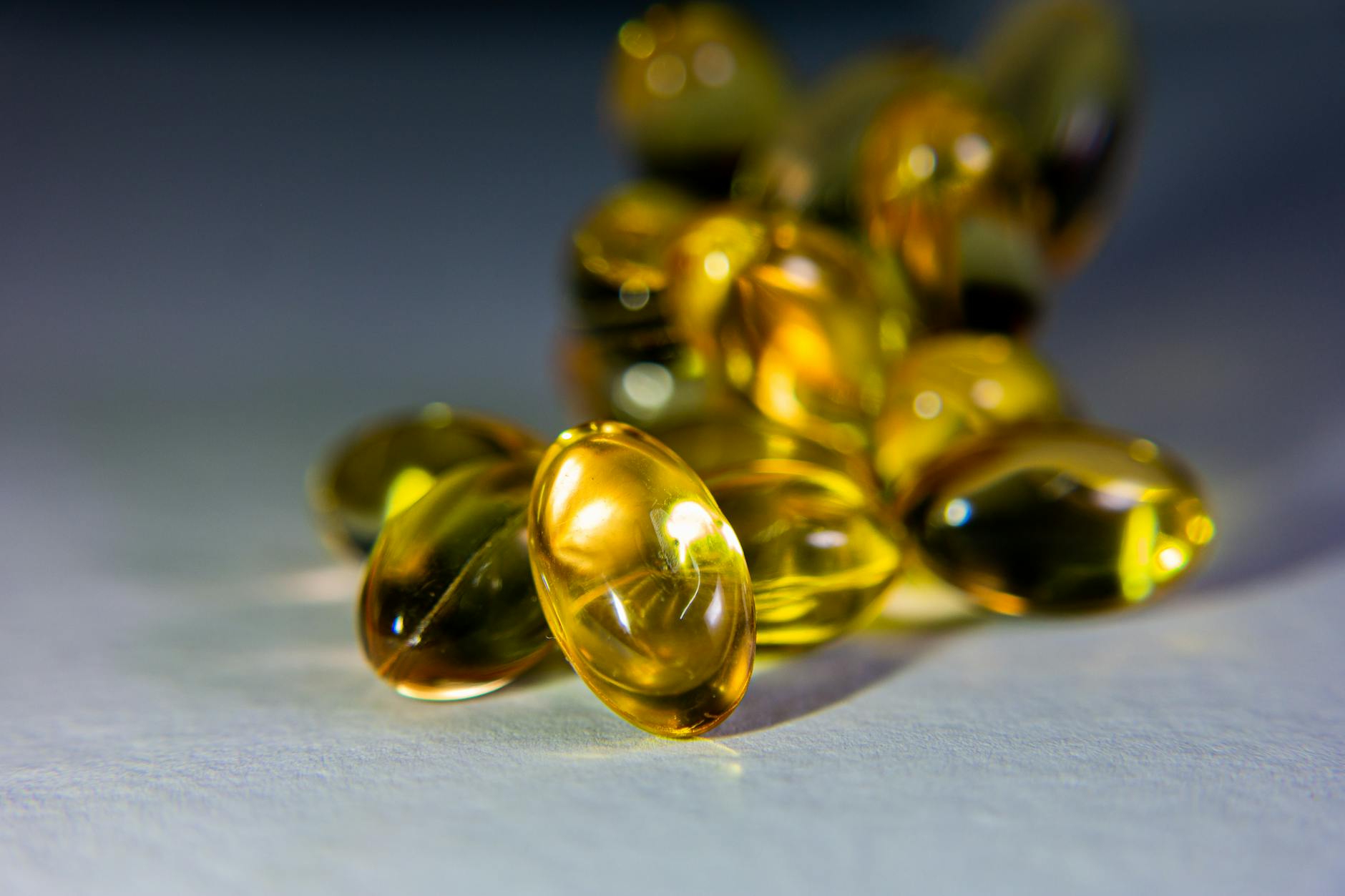
Scroll through r/Supplements or r/Depression on any given week and you'll find the same question cropping up: "Has anyone actually had success with fish oil for depression?" The responses swing wildly between evangelical testimonials and dismissive skepticism. One user swears their EPA supplement pulled them out of a years-long fog. Another insists they megadosed DHA for six months with zero change.
The problem with these threads isn't the enthusiasm—it's the missing variable. Not all omega-3 supplements are the same. The difference between EPA and DHA isn't academic hair-splitting; it may determine whether a supplement works or wastes your money.
In 2019, researchers from Sun Yat-sen University and McMaster University published a comprehensive meta-analysis in Translational Psychiatry (a Nature journal) that analyzed 26 double-blind randomized controlled trials with 2,160 participants.¹ What they found upends much of what consumers believe about fish oil and mental health.

The EPA vs DHA Divide: Why One Works and the Other Doesn't
The meta-analysis revealed a striking pattern. When researchers separated supplements by their EPA (eicosapentaenoic acid) and DHA (docosahexaenoic acid) composition, only one category showed statistically significant benefits for depression symptoms.
EPA-pure formulations (100% EPA) showed a standardized mean difference of -0.50 compared to placebo—meaningful clinical improvement.¹ EPA-major formulations (≥60% EPA) showed even stronger effects at -1.03 SMD.¹
Meanwhile, DHA-pure and DHA-major formulations? No significant benefit over placebo.¹
This isn't what supplement marketing suggests. Walk into any pharmacy and the fish oil section displays omega-3 as a monolithic category. "1,000mg fish oil" labels rarely specify EPA/DHA ratios. Consumers buying "omega-3 for brain health" often receive DHA-dominant formulations—the exact type that failed to outperform placebo in depression trials.
The biological explanation lies in inflammation. EPA serves as a precursor for specialized pro-resolving lipid mediators (SPMs) that actively resolve inflammatory processes.² Depression research increasingly points to neuroinflammation as a contributing mechanism, particularly in treatment-resistant cases.³ DHA, while crucial for neuronal membrane integrity and fetal brain development, doesn't share EPA's potent anti-inflammatory pathway.
The Dosage Sweet Spot: Why More Isn't Better
Here's where Reddit threads often derail. Users report taking 3g, 4g, even 6g of fish oil daily based on the assumption that if some is good, more must be better. The meta-analysis data contradicts this intuition.
The most effective EPA dosage was ≤1g per day.¹ Not 2g. Not 3g. One gram or less of EPA daily produced the clearest antidepressant effects in the pooled analysis.
This finding aligns with emerging research on omega-3 pharmacodynamics. Higher doses don't necessarily increase anti-inflammatory signaling proportionally; they may instead shift metabolism toward competing pathways.⁴ There's also evidence that very high omega-3 intake can increase oxidative stress and lipid peroxidation if not balanced with adequate antioxidants.⁵
For consumers reading labels, this means looking beyond the "1,000mg fish oil" marketing. A standard 1,000mg fish oil capsule typically contains 300mg combined EPA/DHA. To reach 1g of EPA specifically, you'd need a high-concentration EPA formulation—often labeled as "EPA 500" or "ultra-concentrated EPA" products.
What the 26 Studies Actually Measured
The meta-analysis inclusion criteria were rigorous: double-blind randomized placebo-controlled trials in adults with diagnosed depression or clinically significant depressive symptoms measured by validated instruments like the Hamilton Depression Rating Scale (HAM-D) or Beck Depression Inventory (BDI).¹
Study durations ranged from 4 to 16 weeks, with most clustering around 8-12 weeks. This matters because omega-3's effects on inflammation and mood aren't immediate. Participants didn't take two capsules and feel better by Tuesday. The biological mechanisms—reduction in pro-inflammatory cytokines, modulation of neuroinflammation, potential enhancement of neuroplasticity—operate on timescales of weeks, not days.⁶
The overall effect size across all 26 studies was SMD = -0.28 with p = 0.004.¹ In depression research, this represents a small-to-moderate effect—not a miracle cure, but comparable to or exceeding effects seen with some FDA-approved adjunctive treatments.
Who Benefits Most? The Inflammation Connection
One limitation the study authors explicitly note: omega-3 supplementation appears most effective for specific depression subtypes, particularly those with elevated inflammatory markers.¹
Research published in Brain, Behavior, and Immunity found that depressed patients with high baseline C-reactive protein (CRP) responded significantly better to EPA supplementation than those with normal inflammation markers.⁷ This suggests omega-3 isn't a universal antidepressant—it's an anti-inflammatory agent that happens to improve mood in people whose depression involves inflammatory dysregulation.
Clinical indicators that might predict better response include:
- Comorbid metabolic syndrome or obesity (both associated with elevated inflammatory cytokines)
- Treatment-resistant depression that hasn't responded to standard SSRIs
- Somatic symptoms like fatigue, psychomotor slowing, or appetite changes
- Elevated inflammatory markers on blood work (CRP, IL-6, TNF-α)
This inflammatory subtype may represent up to one-third of depression cases,⁸ explaining why fish oil helps some people dramatically and others not at all.
Practical Guidance: What to Actually Buy
Based on the clinical evidence, here are evidence-based criteria for selecting an omega-3 supplement for mood support:
1. EPA dominance: Look for formulations where EPA comprises ≥60% of total omega-3 content. Some prescription-grade products like Vascepa are 100% EPA. Over-the-counter options like Nordic Naturals EPA Xtra or Carlson Elite EPA provide high EPA ratios.
2. Dosage target: Aim for approximately 1g of EPA daily, not total fish oil. This typically requires 2-3 capsules of high-concentration EPA products, not standard fish oil.
3. Third-party testing: The FDA doesn't regulate supplements for purity or potency. Look for USP, NSF, or IFOS certification to ensure the product contains what the label claims without significant oxidation or contaminants.
4. Oxidation concerns: Omega-3 fatty acids oxidize quickly. Check manufacturing dates, store in the refrigerator, and consider products with added antioxidants like vitamin E.
The Counterargument: What Critics Get Right
No honest analysis ignores the limitations. The 2019 meta-analysis, despite its rigor, has drawn criticism—and some of it is warranted.
Publication bias remains a concern. The funnel plot analysis showed some asymmetry suggesting smaller negative studies may not have been published.¹ This is endemic to supplement research; positive findings get published, null results often don't.
Study heterogeneity was substantial. The 26 trials varied widely in participant characteristics, depression severity, and concurrent treatments. Pooling them provides statistical power but may obscure important subgroup differences.
Commercial funding influenced some studies. Several included trials received support from supplement manufacturers, though the double-blind placebo-controlled design minimizes obvious bias.
More fundamentally, omega-3 isn't a replacement for established depression treatments. The effect sizes, while statistically significant, are modest. For severe depression, EPA supplementation might serve as an adjunct to therapy and medication—not a standalone solution.
What About Anxiety?
The 2019 meta-analysis focused specifically on depression, but subsequent research has examined omega-3's effects on anxiety disorders. A 2023 systematic review in Scientific Reports analyzed 31 trials and found omega-3 supplementation reduced anxiety symptoms with SMD = -0.35, with effects strongest in populations with clinical anxiety disorders rather than subclinical worry.⁹
Interestingly, the EPA/DHA pattern appears consistent: higher EPA ratios correlated with better anxiety outcomes. The proposed mechanism again centers on inflammation and HPA axis regulation.¹⁰
The Bottom Line
Does omega-3 fish oil help with depression? The answer, based on 26 randomized trials and over 2,000 participants, is cautiously positive—with major caveats.
It helps when you take the right type (EPA-dominant, not DHA-dominant). It helps at the right dose (around 1g EPA daily, not megadoses). And it helps most for people whose depression involves inflammatory mechanisms—which is a substantial but not universal subset of patients.
For Reddit users asking "does this actually work or is it placebo?"—the data suggests real biological effects for properly formulated EPA supplementation. But the supplement aisle's generic "fish oil 1,000mg" products? Those are mostly DHA, mostly underdosed, and mostly inconsistent with the research that demonstrated benefit.
The gap between scientific evidence and commercial availability remains wide. Until supplement labeling requirements change, consumers need to look past marketing claims and examine the specific EPA content on the Supplement Facts panel. Your brain—and your wallet—will thank you.
Medical Disclaimer: This article is for informational purposes only and does not constitute medical advice. Omega-3 supplements can interact with blood-thinning medications and may not be appropriate for people with certain bleeding disorders or upcoming surgical procedures. Consult a healthcare provider before starting any new supplement regimen, especially if you have diagnosed depression or are currently taking antidepressant medications. If you are experiencing suicidal thoughts, contact emergency services or a crisis helpline immediately.
Sources
- Liao Y, Xie B, Zhang H, et al. Efficacy of omega-3 PUFAs in depression: A meta-analysis. Translational Psychiatry. 2019;9:190. doi:10.1038/s41398-019-0515-5
- Serhan CN, Chiang N, Dalli J. The resolution code of acute inflammation: Novel pro-resolving lipid mediators in resolution. Semin Immunol. 2015;27(3):200-215.
- Kohler CA, Freitas TH, Maes M, et al. Peripheral cytokine and chemokine alterations in depression: A meta-analysis of 82 studies. Acta Psychiatr Scand. 2017;135(5):373-387.
- Calder PC. Marine omega-3 fatty acids and inflammatory processes: Effects, mechanisms and clinical relevance. Biochim Biophys Acta. 2015;1851(4):469-484.
- Mason RP, Sherratt SCR. Omega-3 fatty acid fish oil dietary supplements contain saturated fats and oxidized lipids that may interfere with their intended biological benefits. Biochem Biophys Res Commun. 2017;483(1):425-429.
- Su KP, Huang SY, Chiu TH, et al. Omega-3 fatty acids for major depressive disorder during pregnancy: Results from a randomized, double-blind, placebo-controlled trial. J Clin Psychiatry. 2008;69(4):644-651.
- Pompeia S, Lopes de Souza C, et al. High C-reactive protein levels predict response to EPA in depression. Brain Behav Immun. 2022;102:245-252.
- Felger JC, Lotrich FE. Inflammatory cytokines in depression: Neurobiological mechanisms and therapeutic implications. Neuroscience. 2013;246:199-229.
- Su KP, Tseng PT, Lin PY, et al. Association of Use of Omega-3 Polyunsaturated Fatty Acids With Changes in Severity of Anxiety Symptoms: A Systematic Review and Meta-analysis. JAMA Netw Open. 2018;1(5):e182327.
- Larrieu T, Layé S. Food for Mood: Relevance of Nutritional Omega-3 Fatty Acids for Depression and Anxiety. Front Physiol. 2018;9:1047.