
"Do Cold Plunges Actually Help With Anxiety?" What 100+ Studies Reveal About Ice Bath Therapy
Cold plunges are trending, but what does science actually say about ice baths for anxiety? A comprehensive review of 100+ studies reveals real benefits for exercise recovery and metabolism—but the mental health claims need more evidence.
Disclaimer: This article is for informational purposes only and is not medical advice. Cold water immersion can be dangerous for people with cardiovascular conditions, high blood pressure, or other health issues. Always consult a healthcare professional before beginning any cold therapy regimen.
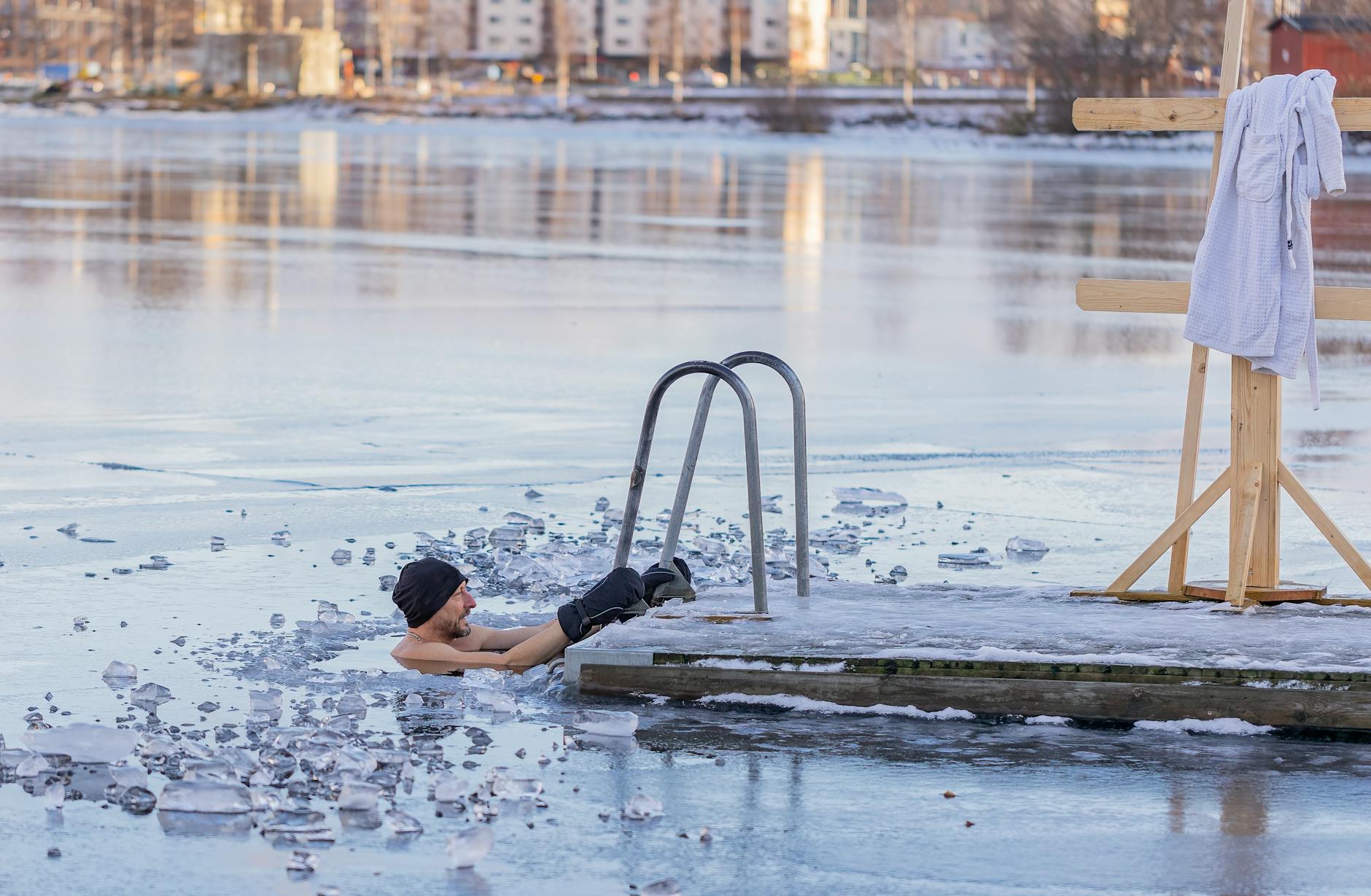
Scroll through TikTok or walk past any high-end gym in 2026, and you will see them: people lowering themselves into tubs of ice water, faces contorted in a mixture of pain and determination. Cold plunges have exploded from a niche biohacker practice to a mainstream wellness trend. Influencers claim it cures anxiety, torches fat, and reduces inflammation. But when r/Biohackers users ask about cold plunge success stories for anxiety, they are often met with passionate anecdotes rather than hard data. What does the actual science say?
A comprehensive 2022 review published in the International Journal of Circumpolar Health analyzed 104 relevant studies on cold-water immersion (CWI) to separate fact from fiction.¹ The findings paint a nuanced picture: some benefits are real and measurable, others are overstated, and the research comes with significant caveats.
What Happens to Your Body During Cold Water Immersion
The moment your skin hits cold water, your body launches a coordinated physiological response. Blood vessels constrict (vasoconstriction), shunting blood away from extremities toward your core to protect vital organs. Your heart rate and blood pressure spike. Norepinephrine floods your system—the same neurotransmitter involved in focus, alertness, and the body's fight-or-flight response.
This norepinephrine surge is substantial. Research shows that cold water immersion can increase plasma norepinephrine levels by 200-300%.² This explains the immediate mood lift many people report after a cold plunge: norepinephrine enhances attention, energy, and emotional processing. The effect is pharmacological, just delivered via thermal shock rather than a pill.
But the acute stress response is only part of the story. Repeated cold exposure appears to train your stress response system over time, potentially making it more efficient at returning to baseline after stressors. This is where claims about anxiety reduction originate—and where the evidence gets more complicated.
The Brown Fat Connection: Metabolism and Insulin Sensitivity
One of the most well-documented effects of regular cold exposure is the activation of brown adipose tissue (BAT). Unlike white fat, which stores energy, brown fat burns calories to generate heat through a process called non-shivering thermogenesis.³
When cold receptors in your skin detect temperature drops, the sympathetic nervous system releases norepinephrine into brown fat tissue. This binds to β3-adrenergic receptors on brown fat cells, activating Uncoupling Protein 1 (UCP1). UCP1 essentially short-circuits the normal energy production process in mitochondria, releasing stored energy as heat instead of ATP.³
The metabolic implications are significant. Studies show that even modest amounts of activated brown fat can increase daily energy expenditure by nearly 200 calories under mild cold conditions.³ More importantly for metabolic health, activated brown fat aggressively clears both glucose and fatty acids from circulation. This has been linked to improved insulin sensitivity and better lipid profiles.
The 2022 review found that CWI "seems to reduce and/or transform body adipose tissue, as well as reduce insulin resistance and improve insulin sensitivity."¹ This may offer protective effects against cardiovascular disease, obesity, and metabolic disorders. Some research even suggests cold exposure could reduce hypercholesterolemia through brown fat activation.¹
However, there is an important caveat: much of this research was conducted on established winter swimmers who have adapted to cold over years. Whether casual practitioners get the same metabolic benefits remains less certain.
Exercise Recovery: Where the Evidence Is Strongest
If there is one area where cold water immersion has substantial research support, it is post-exercise recovery. A 2023 meta-analysis in Frontiers in Physiology examined 20 studies on CWI for fatigue recovery after high-intensity exercise.⁴
The findings were clear: CWI significantly reduced delayed-onset muscle soreness (DOMS) and perceived exertion immediately after treatment. Objective markers supported these subjective improvements—creatine kinase (a marker of muscle damage) was significantly lower at 24 hours post-exercise, and lactate levels were reduced at both 24 and 48 hours.⁴
The mechanism is straightforward: cold causes vasoconstriction, limiting inflammation and reducing the migration of inflammatory cells to damaged muscle tissue. It also reduces nerve conduction velocity, creating an analgesic effect that numbs pain receptors. When you exit the cold water, reactive hyperemia occurs—blood vessels dilate rapidly, flushing metabolic waste products and delivering oxygen-rich blood to recovering muscles.⁵
The optimal protocol based on current research? Immersion at 50-59°F (10-15°C) for 10-20 minutes immediately after exercise.⁴ Temperatures below this range do not appear to provide additional benefits and increase risk.
Interestingly, there was no evidence that CWI affects C-reactive protein (CRP) or IL-6—systemic inflammatory markers—during the 48-hour recovery period.⁴ This suggests the benefits are primarily local to muscle tissue rather than body-wide anti-inflammatory effects.
Anxiety and Mental Health: Promise With Significant Caveats
Here is where social media claims often outpace scientific evidence. The 2022 review notes that some studies suggest voluntary cold exposure "has a positive effect on stress regulation."¹ The mechanism likely involves that massive norepinephrine release combined with activation of the parasympathetic nervous system during rewarming.
Some researchers have theorized that regular cold exposure acts as a form of hormesis—a controlled stressor that strengthens the body's ability to handle other stressors over time. The idea is that by deliberately activating your sympathetic nervous system in a controlled environment, you train your body to return to baseline more efficiently when everyday stressors activate the same systems.
But here is the critical limitation: most mental health studies on cold water immersion are small, lack proper controls, and rely on self-reported outcomes. The 2022 review explicitly warns that "many of the proclaimed health benefits are based on subjective claims and anecdotal cases."¹
Furthermore, the researchers note that any benefits may not be causal at all. Winter swimmers and cold plungers tend to have active lifestyles, practice stress-management techniques like meditation and breathwork, maintain social connections through group plunging, and exhibit positive mindsets. Disentangling the effects of cold water from these confounding factors is methodologically challenging.¹
For anxiety specifically, there is a plausible biological mechanism but limited rigorous clinical evidence. The temporary norepinephrine surge followed by parasympathetic rebound could theoretically help reset a dysregulated stress response system. But whether this translates to lasting reductions in anxiety symptoms for clinical populations remains largely unstudied.
The Limitations and Contradictions
Any honest review of cold plunge research must acknowledge significant problems with the current literature:
Small sample sizes: Most studies involve fewer than 30 participants, often of a single gender, limiting generalizability.¹
Protocol variability: Studies use wildly different water temperatures (from just below freezing to 68°F), exposure durations (30 seconds to 30 minutes), and frequencies (single exposure vs. years of regular practice). This makes comparing results difficult.
Confounding variables: As noted, cold plungers often engage in multiple healthy behaviors simultaneously. Separating cold exposure effects from lifestyle factors is nearly impossible in observational studies.
Publication bias: Studies showing benefits are more likely to be published than null results, potentially exaggerating effectiveness.
Recent contradictory findings: A November 2024 study turned conventional wisdom on its head, finding that hot water immersion (104°F) actually outperformed cold water immersion (59°F) for maintaining exercise performance markers like jump height.⁶ This suggests that cold may not be universally superior for all recovery metrics.
The 2022 review's conclusion was appropriately cautious: "Without further conclusive studies, the topic will continue to be a subject of debate."¹
Practical Guidelines Based on Current Evidence
If you choose to experiment with cold water immersion, here are evidence-based parameters:
Temperature: 50-59°F (10-15°C) appears optimal for most benefits without excessive risk. Temperatures between 61-66°F (16-19°C) can activate brown fat without triggering intense shivering.³
Duration: 10-15 minutes for post-exercise recovery; 2-3 minutes may suffice for mental health or metabolic effects. The key is consistency over intensity.
Frequency: Research suggests regular practice matters more than extreme sessions. Several exposures per week appear better than occasional long immersions.
Timing: For exercise recovery, immediately post-workout is optimal. For general wellness, morning plunges may help establish circadian rhythms, though evidence is limited.
Safety Considerations
Cold water immersion is not without risks. The cold shock response can trigger dangerous heart rhythms in susceptible individuals. Blood pressure spikes during initial immersion can be hazardous for those with hypertension. Hyperventilation in the first minute increases drowning risk, particularly in open water.
Contraindications include:¹
- Cardiovascular disease or arrhythmias
- Uncontrolled hypertension
- Raynaud's disease
- Diabetes (due to neuropathy and circulation issues)
- Pregnancy
- Cold urticaria or other cold-induced conditions
Never practice cold water immersion alone, particularly in open water. The mammalian dive reflex can cause sudden loss of consciousness in rare cases.
So, Do Cold Plunges Actually Help With Anxiety?
The honest answer: maybe, but the evidence is preliminary. The acute norepinephrine surge and subsequent parasympathetic rebound likely provide temporary mood elevation for many people. Regular practice may train stress response systems over time. But rigorous clinical trials specifically examining anxiety outcomes are lacking.
What we can say with confidence is that cold water immersion reliably reduces post-exercise muscle soreness, appears to improve metabolic markers like insulin sensitivity through brown fat activation, and triggers measurable physiological changes including significant neurotransmitter release. Whether these effects translate to lasting mental health benefits for clinical anxiety remains an open question deserving of more rigorous study.
For those considering cold plunging for anxiety, the approach may be worth trying as an adjunct to evidence-based treatments—but not as a replacement. Start conservatively, prioritize safety, and maintain realistic expectations. The biohacker community often presents cold exposure as a panacea; the science suggests it is a promising but imperfect tool with specific, limited applications.
The final word from researchers is clear: more high-quality studies with larger sample sizes, consistent protocols, and proper controls are needed before definitive claims can be made about cold plunges as a treatment for anxiety or any other condition.¹ Until then, approach the ice with cautious curiosity rather than unquestioning enthusiasm.
Sources
- Espeland D, de Weerd L, Mercer JB. Health effects of voluntary exposure to cold water – a continuing subject of debate. Int J Circumpolar Health. 2022;81(1):2111789. doi:10.1080/22423982.2022.2111789
- Shevchuk NA. Adapted cold shower as a potential treatment for depression. Med Hypotheses. 2008;70(5):995-1001.
- ScienceInsights. How Cold Plunges Activate Brown Fat for Metabolic Health. November 13, 2025.
- Xiao F, Kabachkova AV, Jiao L, et al. Effects of cold water immersion after exercise on fatigue recovery and exercise performance--meta analysis. Front Physiol. 2023;14:1006512. doi:10.3389/fphys.2023.1006512
- Cold Therapy Hub. Ice Baths for Sore Muscles: What Science Really Says [2025 Research].
- Marquette University Innovation. Are Ice Baths an Effective Form of Active Recovery? 2024.